
Should I Seal My Driveway After Pressure Washing?

June 14, 2023

A Guide to Sealing Your Concrete Driveway

Should I seal my concrete driveway after pressure washing? We get that question a lot at Pristine Clean and it’s a good one. Concrete driveway sealing helps prevent future staining and damage from ice, salt, and various contaminants. It all depends on how you wash the driveway, when you are doing the job, and what type of sealer you use. Regular concrete driveway cleaning and sealing is very important to the longevity of your concrete, which is very expensive to replace. On average most concrete driveways cost over $6000 to replace. So, doing the job correctly is key to preserving the concrete and saving money.
How Often Should You Seal a Concrete Driveway?

How Often Should You Seal a Concrete Driveway?

Maintaining a concrete driveway requires some thought, as the frequency of sealing will depend on environmental and use factors. Sealers vary in efficiency and longevity, so it is important to choose one that meets your needs. Ultimately, it’s recommended to seal a concrete driveway every 1-3 years for maximum protection against the weather we experience in Northeast and Central Ohio—a surefire way to keep your home looking its best!

With so many benefits of concrete sealers, even professional contractors highly recommend that homeowners take the extra step to protect and extend the longevity of their driveway. In this brief guide we explore why sealing your driveway is worth considering—from superior durability to easier maintenance!

Pros and Cons of Sealing a Concrete Driveway

If you have never sealed your concrete driveway before, you may be interested in the pros and cons of concrete sealing. Read on to learn about the benefits and disadvantages of concrete sealing.

The Benefits of Concrete Sealing

A concrete driveway is an investment: Sealing it regularly is a great way to protect it for the long run. Not only does it help to prevent cracking, but it also preserves its original look as well as protects against staining and other deterioration caused by the elements.

In addition, sealing concrete will make it much easier to clean and maintain in the future since dirt and pollutants can’t penetrate the barriers formed by sealant, meaning you can enjoy your surfaces worry-free. Sealing is also an easy and cost-efficient way to add a touch of shimmer or shine that will take your concrete driveway from drab to fab!

Disadvantages of Concrete Sealer

Concrete sealing, as beneficial as it is for protecting surfaces from harsh weather and other exterior elements, does come with a few disadvantages. Good sealants can be more expensive, and need to be reapplied every few years. The process of applying the sealant requires a certain level of skill to keep the appearance looking neat and uniform, which means hiring a professional concrete washing and sealing company may be necessary.

When it rains, other concrete surfaces like walkways and patios can fill with water that has nowhere else to go. This can make them incredibly slippery—which is why you should consider investing in a good concrete paver sealer for extra protection.

Use Concrete Sealer After Pressure Washing

Use Concrete Sealer After Pressure Washing

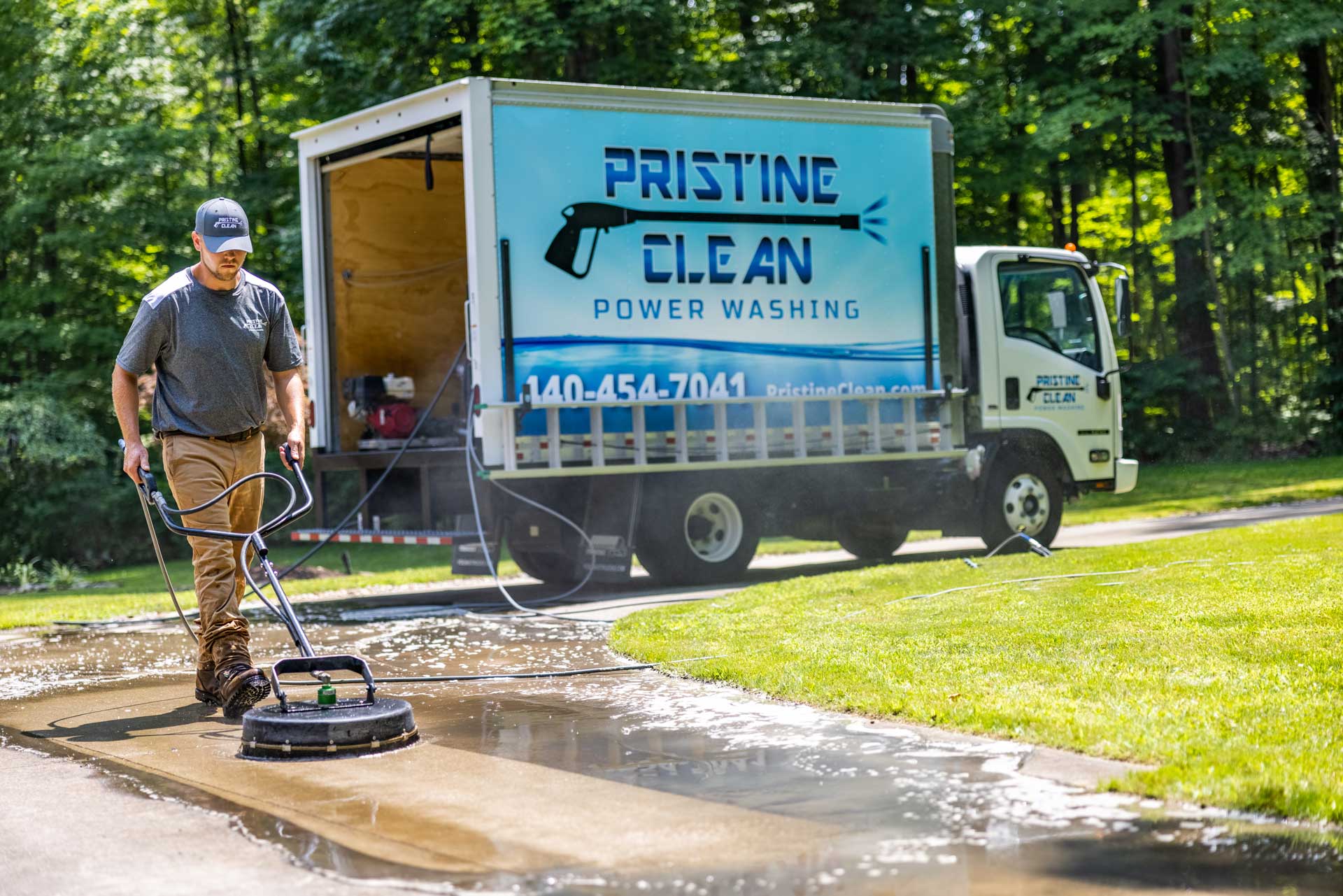
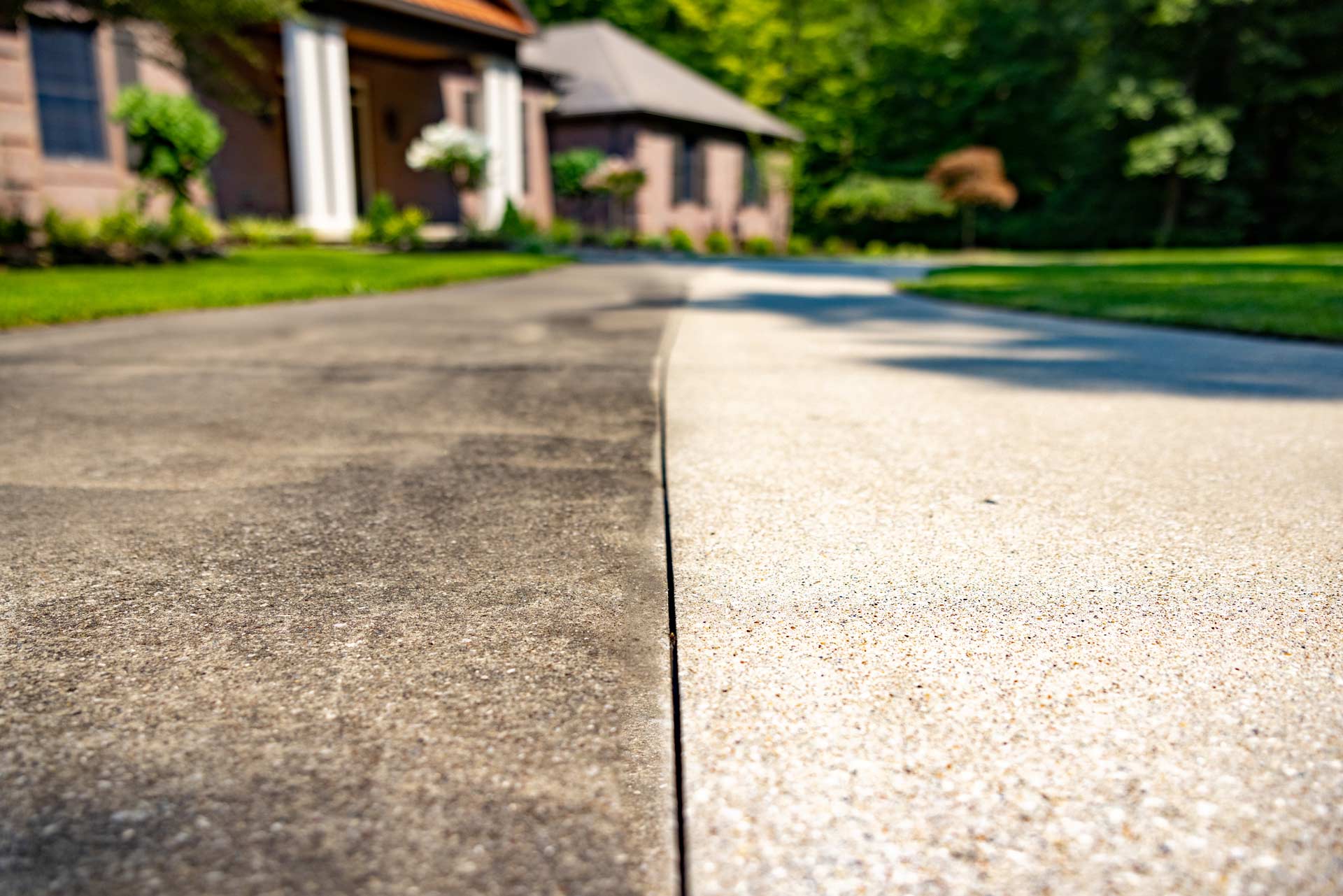
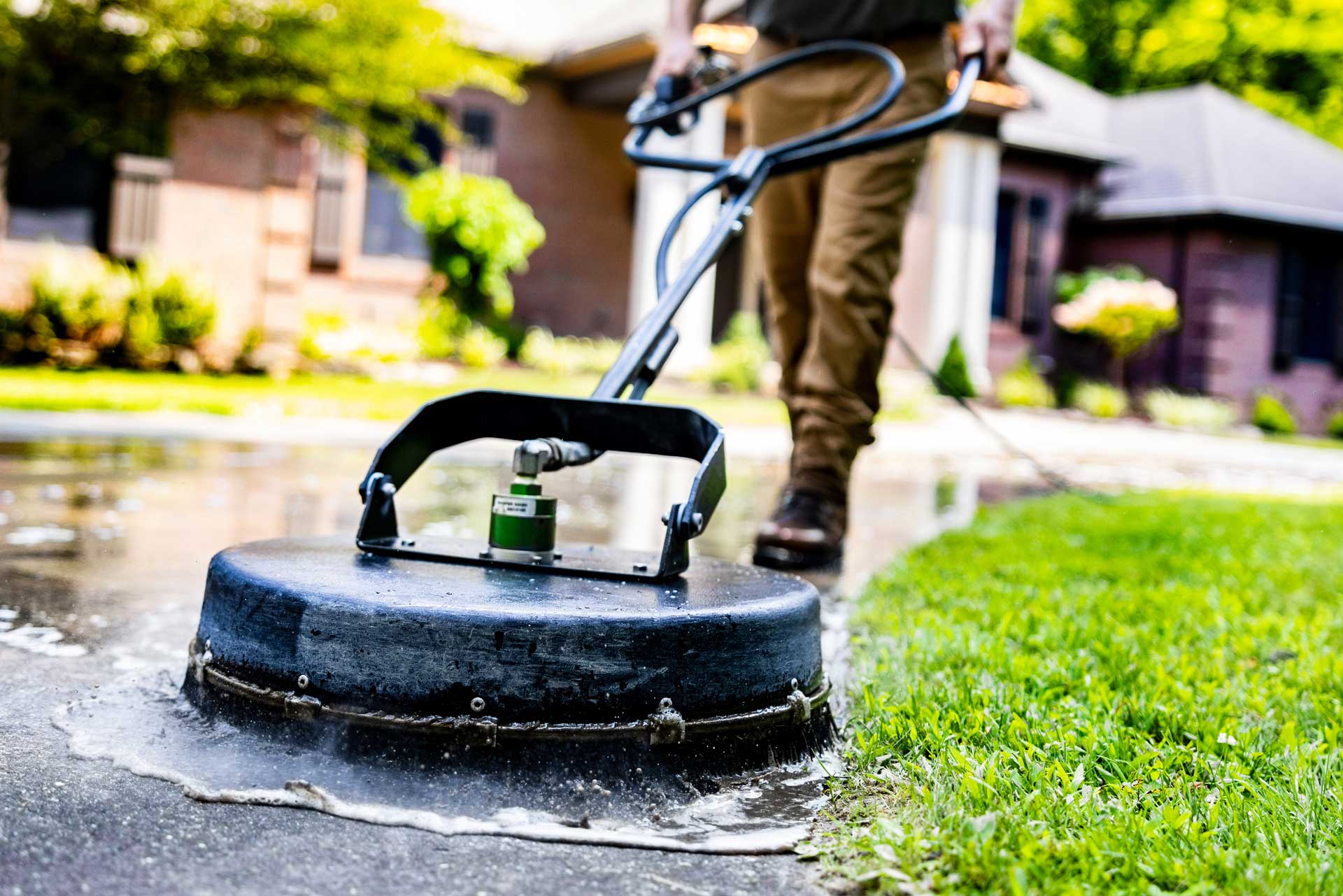
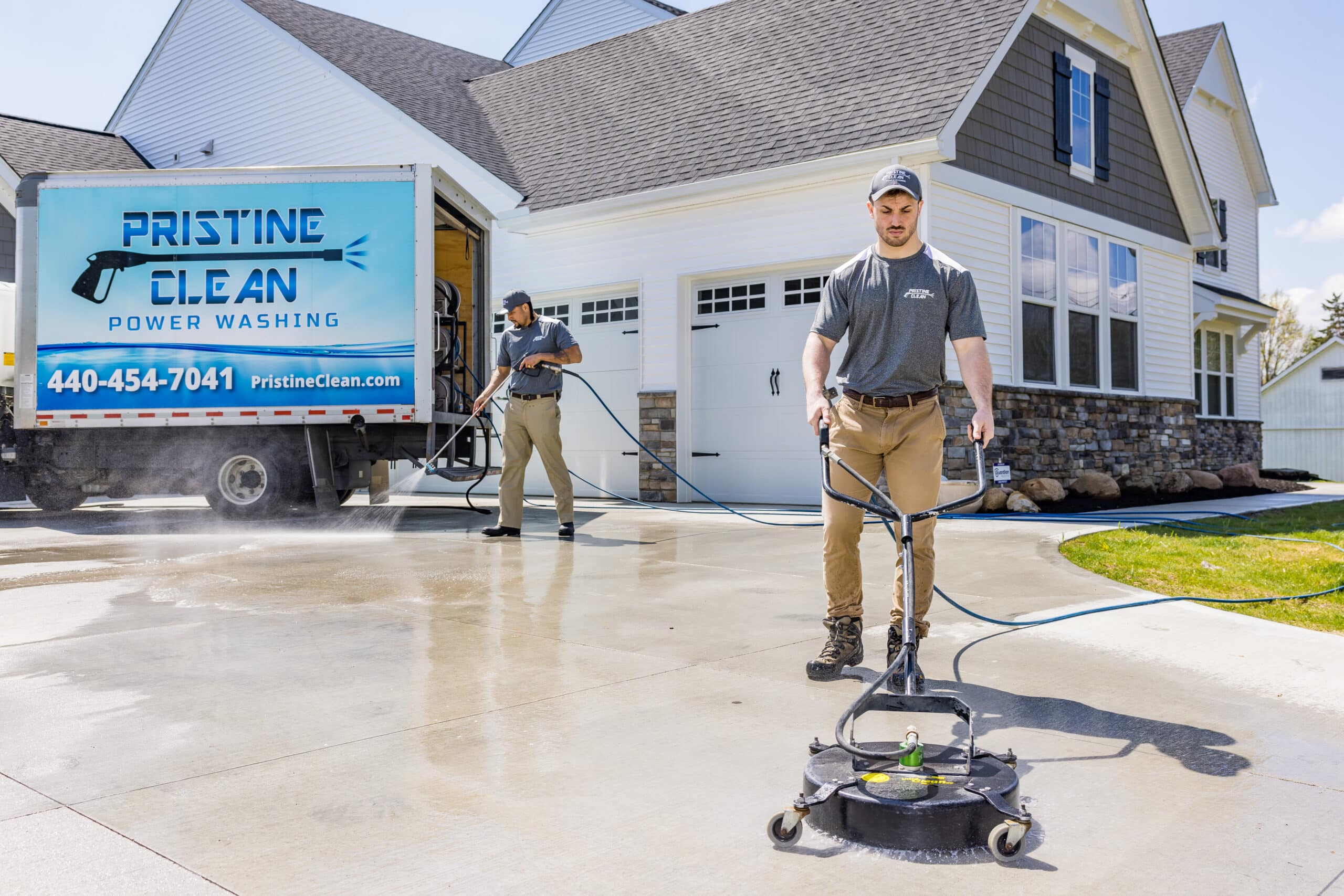
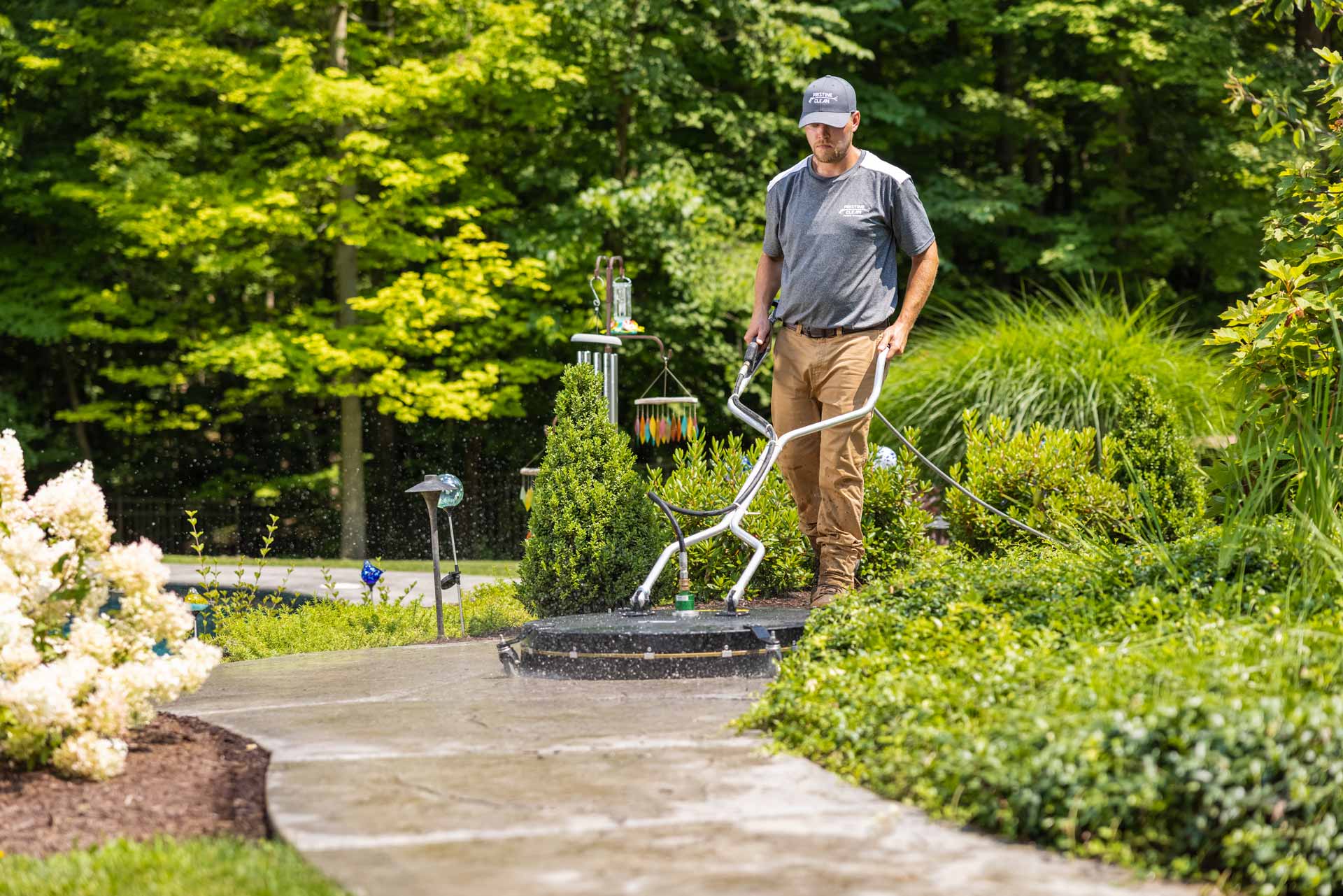
The most effective way to clean concrete is by pressure washing it. Concrete is porous by nature, and the voids deep within fill up with dirt, contaminants, and water, not to mention what’s on the surface. Think of your driveway like one big sponge. It soaks up everything! An effective pressure wash cleans the pores of your concrete. Make sure to apply concrete sealer after pressure washing.

As a rule, concrete over two years old is safe to power wash with a walk-behind unit. Newer concrete must not be power washed with the same technique. Wash new concrete with a light detergent wash. Using too much pressure strips the cure-and-seal, and can leave a bad reveal.

You don’t want your driveway looking like a zebra! If you don’t have a commercial cleaning unit, make sure to use the appropriate tip or spray nozzle. Some tips focus the power on a concentrated area and can leave marks or etches. Stay away from turbo or tornado nozzles! Using too broad of a tip will not get enough power to clean, so striking a balance is key.

Use a Water-Based Seal for Aggregate Concrete

Not all sealers are created equal, and not all sealers are meant for the same applications. There are different types of concrete, and using the sealer made for that specific application is critical. There are generally two types of concrete that the homeowner sees; smooth concrete and aggregate mixed concrete. Examples of smooth concrete are garage and basement floors along with stamped concrete patios.

Oil or solvent-based sealers are used on smooth applications like these. The sealer creates a membrane on the top since it cannot penetrate it. Concrete mixed with aggregate is commonly used for residential driveways and a water-based, deep-penetrating sealer is recommended.

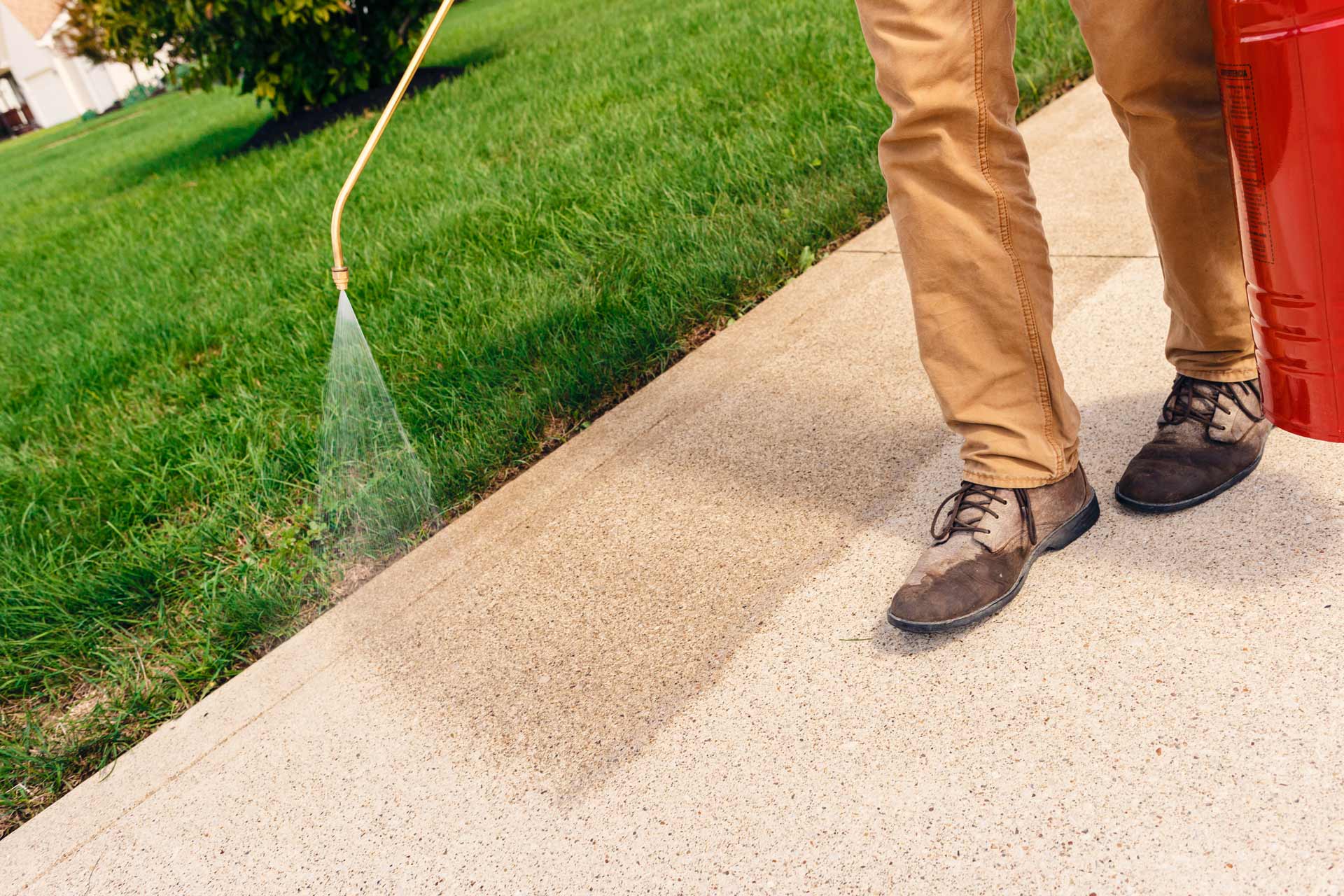
Again, your driveway has pores of various sizes, and after it’s cleaned, it’s ready to receive concrete sealing. Penetrating sealers that contain Silane and Siloxane are perfectly formulated for your driveway. The combination of those two molecules fills the larger and smaller voids deep within the concrete, making it more resistant to cracking, chipping, and staining. Penetrating sealants are invisible, so the sealed concrete driveway should generally look the same. When water interacts with the newly sealed driveway, beading is expected.

How Long Should You Wait to Seal the Concrete After Pressure Washing?

How Long Should You Wait to Seal the Concrete After Pressure Washing?

Assuming you are sealing aggregate concrete with a water-based sealer, you don’t have to wait long after power washing to apply. It’s best to seal the driveway when damp actually. Our vast experience in washing and sealing driveways informs us here. A mix of seven percent Silane/Siloxane contains quite a bit of water in the container, and that water acts as a delivery method to get sealant into the concrete.

Once applied, gravity pulls the sealant deep into the aggregate. In the past, our technicians waited until the concrete was bone dry, but the reveal showed wand marks and looked goofy. So, a slightly damp driveway actually helps for a much more evenly distributed sealant, and the look is great!

Let the Pristine Team Handle Your Concrete Washing and Sealing

Let the Pristine Team Handle Your Concrete Washing and Sealing

If this all sounds too intimidating, we get it. Our team spends thousands of hours washing and sealing driveways all across Cleveland and Columbus, and we go through thousands of buckets of sealer. It’s never bad to call the pros and get it done right. You will have peace of mind knowing your concrete is cleaned correctly and sealed for winter.