Why should I have my concrete driveway pressure washed and sealed?
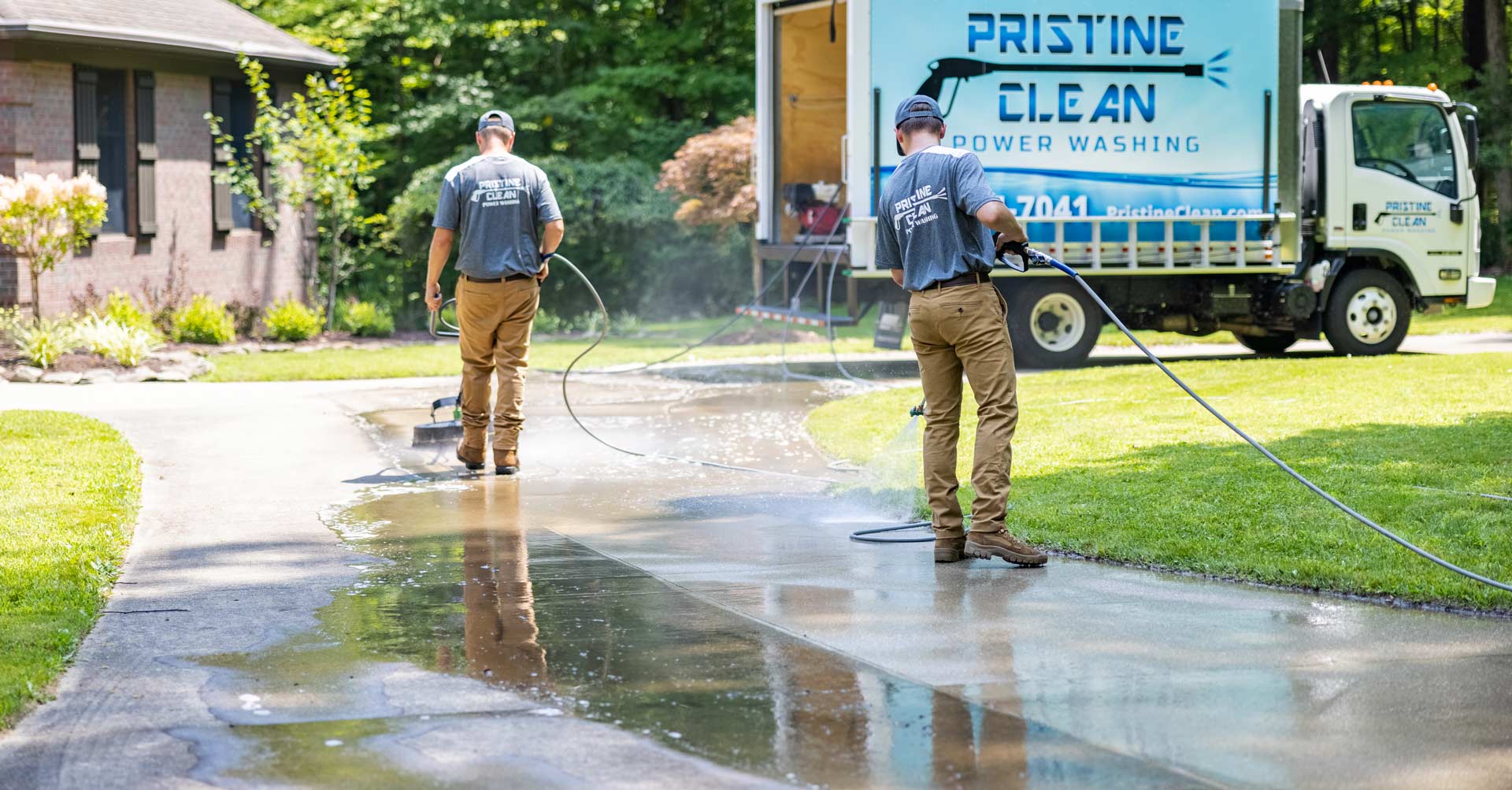
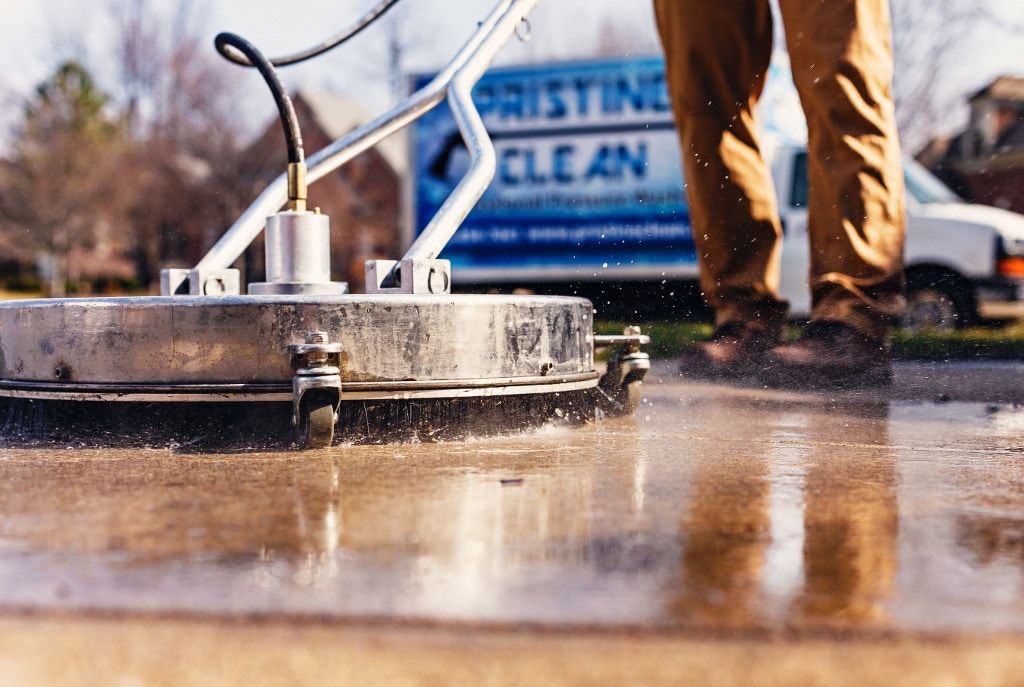
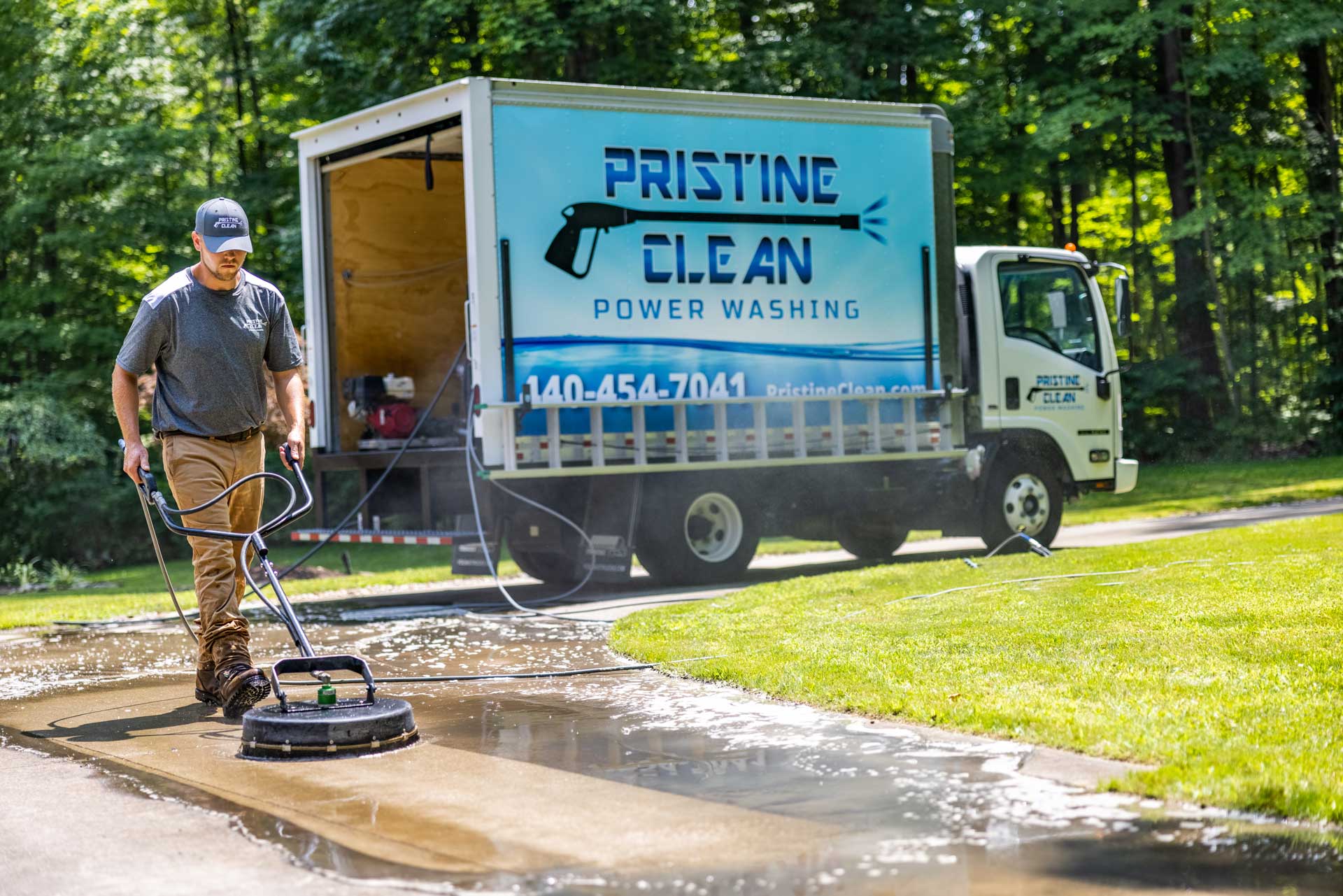
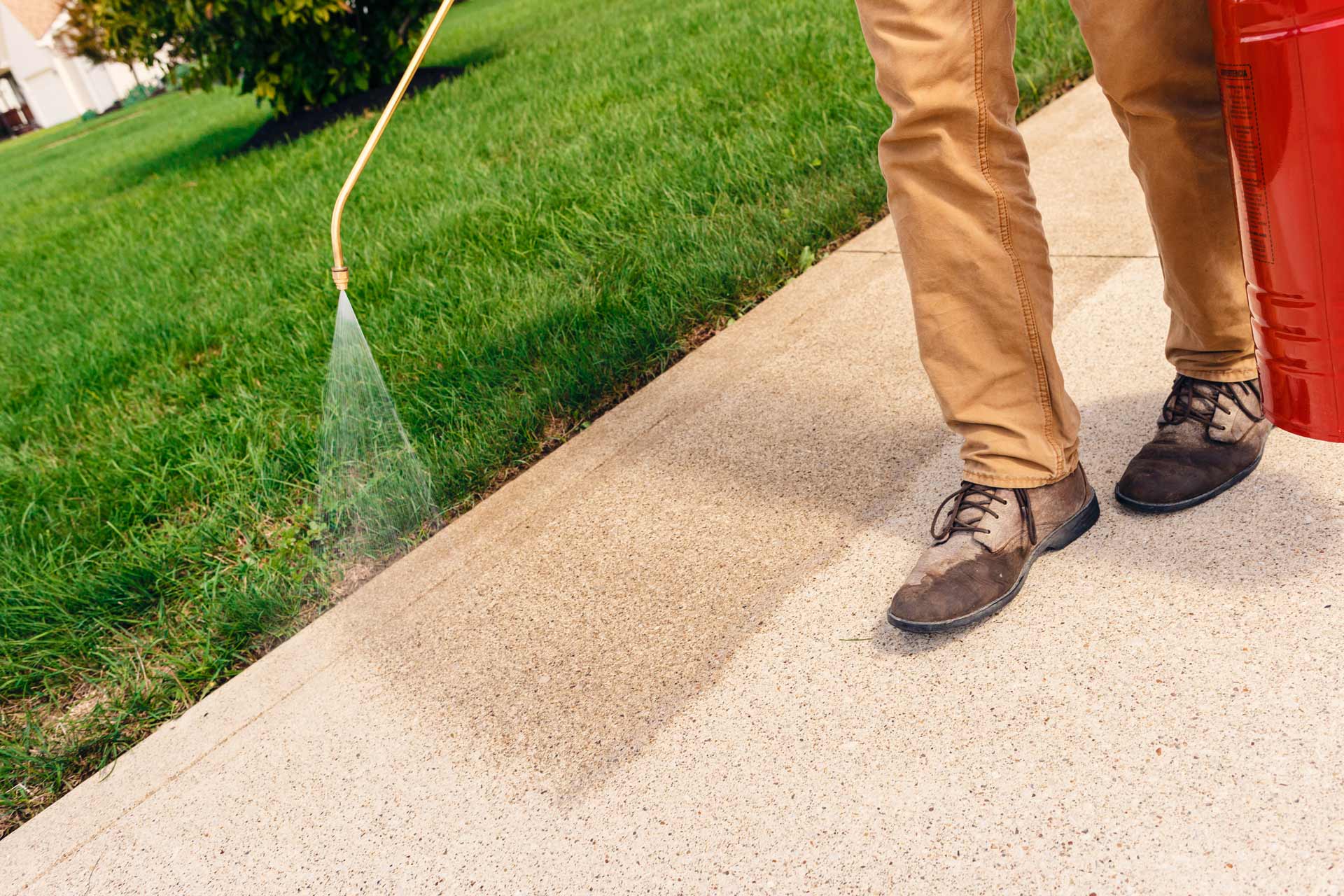
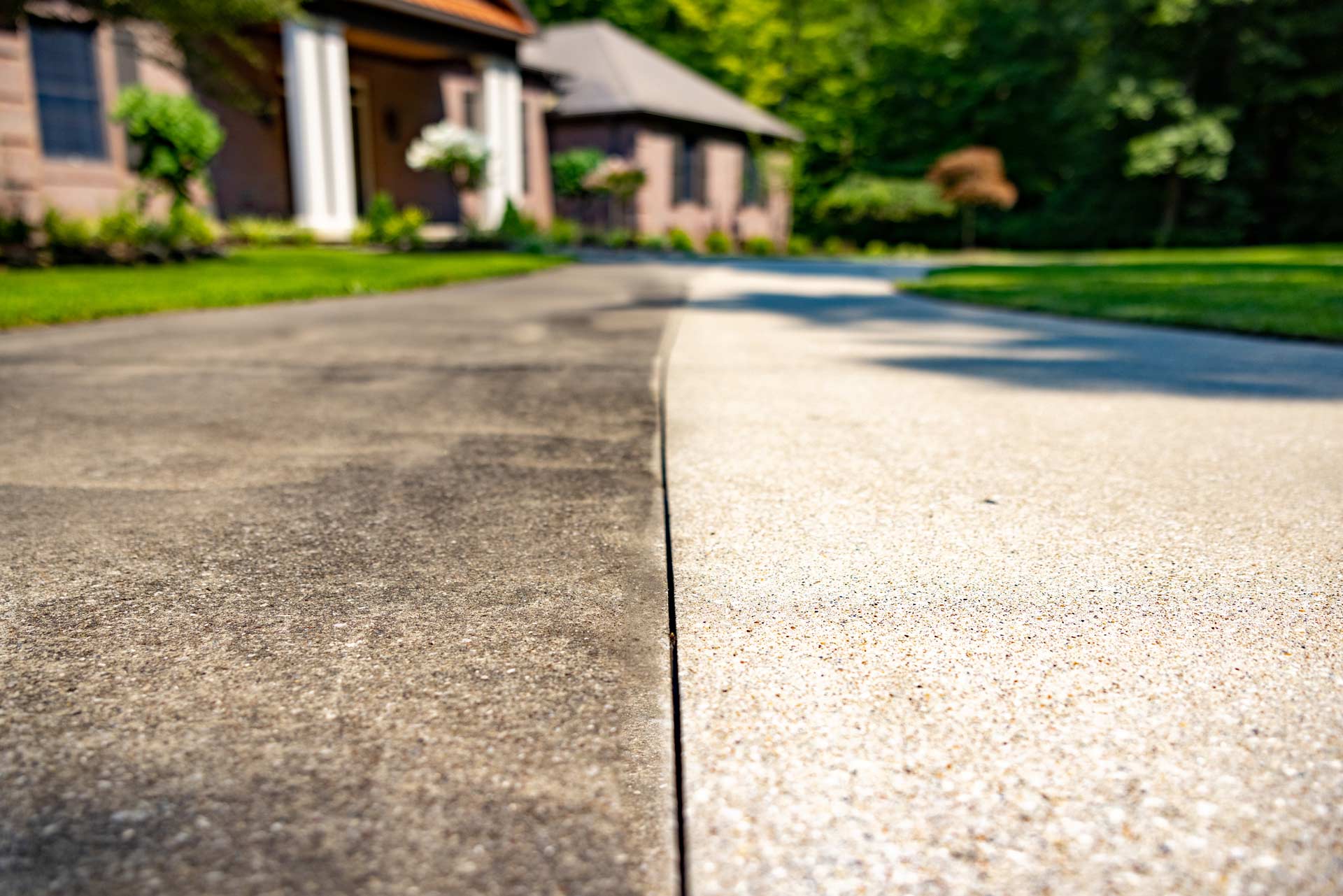
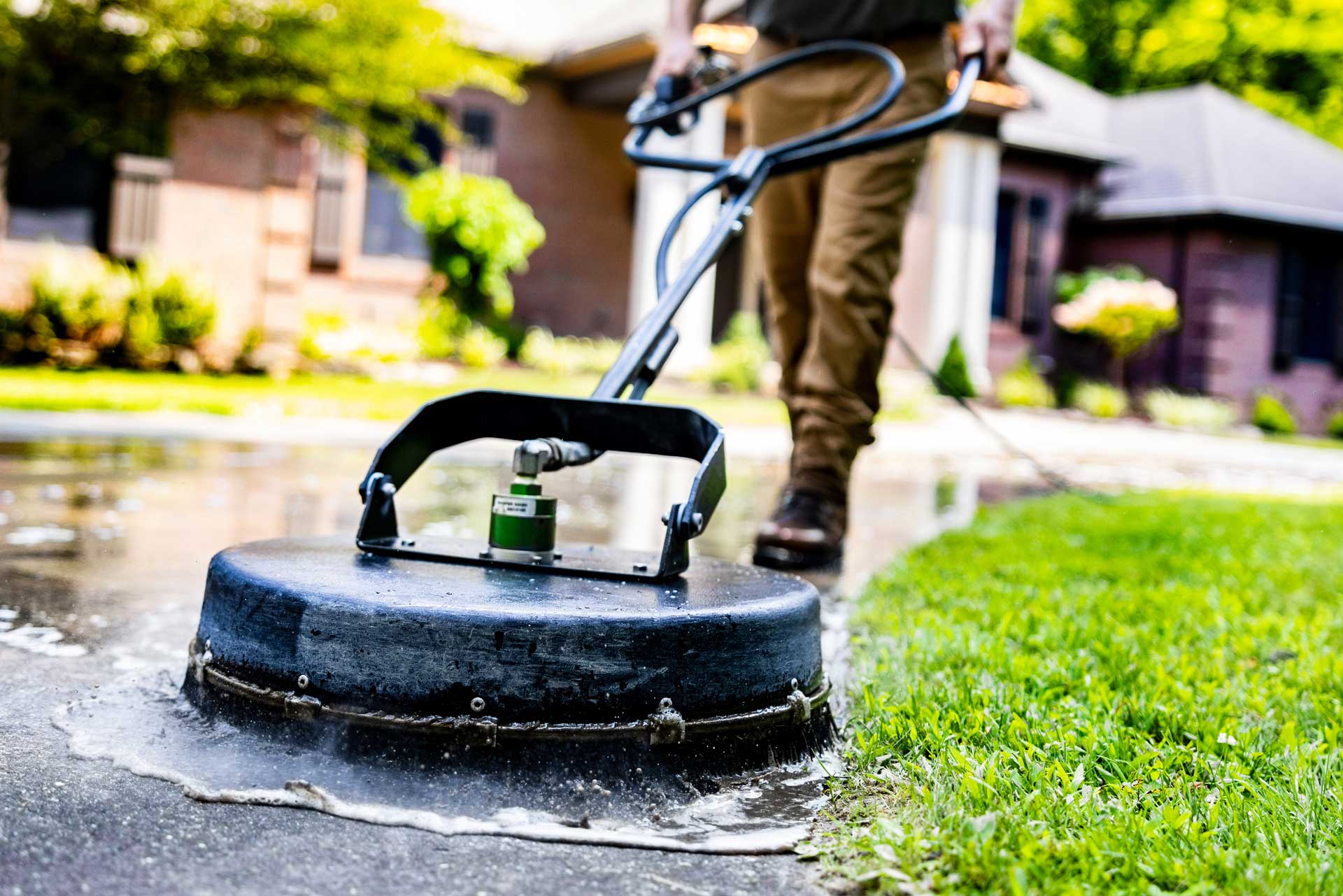
Concrete is like a sponge and will absorb liquids and contaminants from the surface. When the temperatures drop to freezing, the liquids absorbed in the concrete expand causing the concrete to crack, chip, and pit. The best way to prevent damage to your concrete caused by the freeze-thaw cycle is having it professionally pressure washed and sealed with a deep-penetrating, siloxane-based concrete sealant to protect the concrete from within and preserve its longevity.
How often should I have my concrete driveway sealed?
For adequate protection, concrete should be washed and sealed at least every two years.
What kind of flat surfaces can and cannot be pressure washed?
It is generally safe to pressure wash concrete, stamped concrete, brick, patio pavers, and stone. Concrete that is less than two years old and sandstone should not be pressure washed but soft washed with low water pressure and detergents.
How many years must pass before a newly poured concrete driveway can be safely pressure washed?
Concrete should not be pressure washed until it has cured for two years.
How many months must pass before newly poured concrete can be safely soft washed and sealed?
New concrete must be allowed to cure for three months before being soft washed and sealed.
Can you wash and seal a concrete driveway that is less than two years old?
Yes. Newer concrete can be safely soft washed with lower water pressure and detergents. Newer concrete can also be sealed with a siloxane based sealer.
How long does it take concrete sealer to dry?
Our concrete sealer takes approximately 30 minutes to dry to the touch. We recommend that you don’t walk on it for an hour after application and don’t drive on it for 8 hours.
What kind of concrete sealer do you use and why?
Our sealant is a premium, deep-penetrating, siloxane sealer. The siloxane is a polymer with properties that make it ideally suited to fill the natural gaps and spaces in concrete. There are two types of concrete sealers, membrane sealers and penetrating sealers. Membrane Sealers are usually acrylic and oil based sealers that get applied over concrete to form a kind of shield much like suntan lotion on skin. Penetrating Sealers get absorbed into the concrete and protect it from within. Penetrating sealers are to be preferred primarily because they last longer than membrane sealers that are exposed to the harsh elements including harmful UV Rays from the sun. In addition, unlike membrane sealers, penetrating sealers do not change the appearance of concrete nor do they make the concrete slippery when wet. Finally, membrane sealers can “ghost” when moisture gets trapped between the sealant and concrete making the concrete appear milky and they often wear out unevenly leaving the concrete looking splotchy. Penetrating sealers generally wear evenly.
How long does a concrete sealer last?
Our silane/siloxane sealer lasts about two years and then it should be re-washed and sealed. Not only will this maintenance keep your concrete protected, it will also keep your driveway looking its best!
What kind of flat surfaces can be sealed with your sealer?
The types of flat surfaces that can be sealed with our deep penetrating sealer are those made of concrete, brick, paver, stone, and sandstone.
Can your sealant be applied when the concrete is damp?
Yes. Because the delivery method of our sealant is water, it can be applied to concrete that is damp and does not require the concrete to be completely dry.
How long does it take for your sealant to be fully absorbed by the concrete?
On a sunny, warm day, our sealant absorbs within an hour. On a cloudy, chilly day, our sealant will take a little longer to absorb and may need up to three hours.
How long do I have to wait before I can walk or drive on the concrete driveway after it has been sealed?
Concrete should be allowed to absorb the sealant for at least one hour before walking on it and for twelve hours before driving on it.