If you own a concrete driveway in Ohio and haven’t sealed it before winter, you’re letting water do the damage for you. Freeze-thaw cracks, salt pitting, surface flaking—all of it starts the same way: unprotected concrete soaking up water that freezes and expands. Seal before the first hard freeze and you skip most of the damage. Wait until spring and you’re paying to fix it.
Winter Prep for Your Ohio Driveway: Concrete Sealing Before the Freeze
REQUEST YOUR FREE QUOTE
Why Ohio Winters Wreck Concrete Driveways
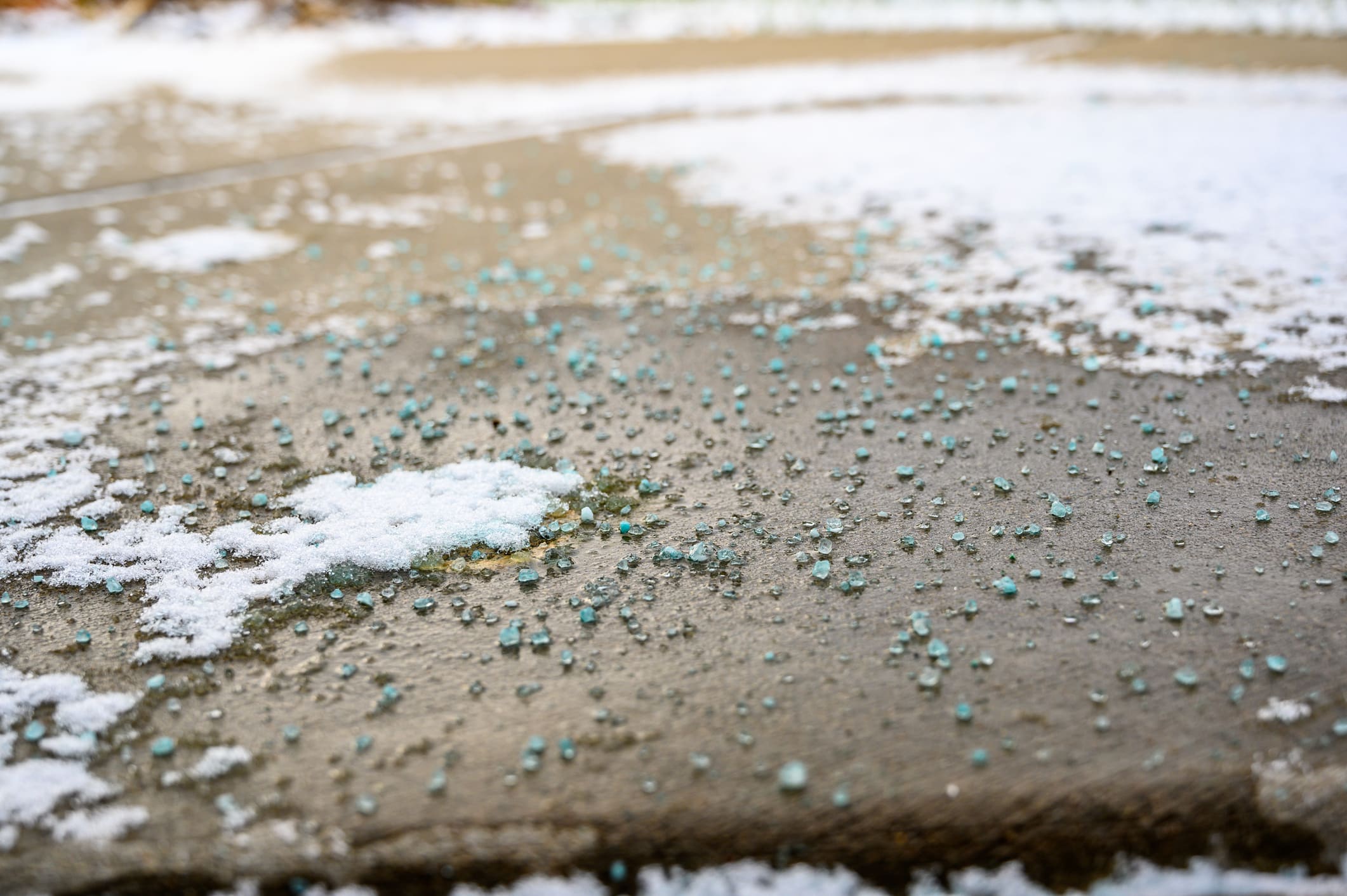
Concrete is porous. It soaks up water, road salt, and whatever else gets tracked onto it. Then Ohio hands it 60 to 80 freeze-thaw cycles between November and March. Every time water freezes inside the concrete, it expands by about 9%. That expansion cracks the surface from inside out.
One winter won’t show it. Three or four winters in, you’ll see pitting, flaking, and chipping. By year six or seven on an unsealed driveway, you’re looking at resurfacing or replacement.

How Freeze-Thaw Damage Shows Up
The damage follows a pattern:
Small round pits. Water froze, chipped the surface.
Hairline cracks. Fine cracks running across the slab.
Flaking. Thin top layers peel away.
Spalling. Larger chunks break off and expose the aggregate underneath.
Structural cracks. Deep cracks running all the way through.
Sealing fixes stages 1 and 2. Stage 3 and up means you need concrete work before you can seal.
Signs Your Driveway Needs Sealing Before Winter
Walk the driveway on a dry day. Look for:
- Water that soaks in instead of beading. Sealed concrete sheds water. If it absorbs within seconds, your sealer is gone.
- White chalky residue. That’s efflorescence—minerals pulled to the surface by moisture. Direct evidence that water is getting in.
- Round pits across the surface. Early freeze-thaw damage.
- Dark stains near the garage. Where salt and vehicle drip settle. Unsealed concrete absorbs it and keeps it.
- Chalky, lifeless color. Sealed concrete holds its tone. A faded look means the surface is open.
It’s been more than two years since you had it sealed. Siloxane sealers wear out around that mark in Ohio.
Any one of those is a reason to get your concrete driveway sealed before freeze season.

When to Seal in Northeast and Central Ohio
Late September through mid-November. Hard cutoff when daytime temps stop reaching 50 degrees.
Why that window:
- Sealers need 50-plus degrees to cure.
- Humidity below 85%.
- No rain for 24 hours after application.
In Cleveland and the Northeast Ohio suburbs, that’s usually a last call by early November. Lake-effect weather pushes freeze-thaw cycles higher here than almost anywhere else in the state, which is why the Cleveland sealing window closes earlier than Columbus’s.
Can you seal in cold weather? Not well. Cold-weather sealers exist, but they don’t bond as deeply below 50. Waiting until spring beats applying a sealer that won’t cure right.
Which Sealer Actually Works for Ohio
Two types of sealers. One works for Ohio winters. The other doesn’t.
Penetrating sealers (siloxane and silane).
Absorb into the concrete and bond with it from the inside. Don't change the look. Don't get slippery when wet. Don't peel. Hold up to freeze-thaw. This is what you want.
Membrane sealers (acrylic and oil-based).
Sit on top of the concrete as a thin coating. Cheaper, but they peel, wear unevenly, trap moisture (which gives the concrete a milky "ghosted" look), and get slick when wet. Not the right choice for an Ohio driveway.
Pristine Clean uses a siloxane sealer. It soaks about 1/8 to 1/4 inch into the concrete and bonds there. Freeze-thaw doesn’t peel it off because it’s not sitting on top.
Siloxane vs. Acrylic at a Glance
| Siloxane Penetrating |
Acrylic Membrane |
|
|---|---|---|
| How it works | Absorbs into concrete | Coats the surface |
| Freeze-thaw performance | Great | Peels over time |
| Changes look | No | Adds sheen |
| Slippery when wet | No | Can be |
| Lifespan in Ohio | ~2 years | 1 to 2 years |
| Wears evenly | Yes | No – can ghost or splotch |
| Right for driveways | Yes | No |

Our Concrete Clean and Seal Process
Three steps. Not just a sealer application.
- Biodegradable cleaner. Breaks loose dirt, oil, and biological staining.
- Walk-behind surface cleaner. Commercial-grade wash that removes everything embedded in the surface without etching. A wand attachment can’t match it.
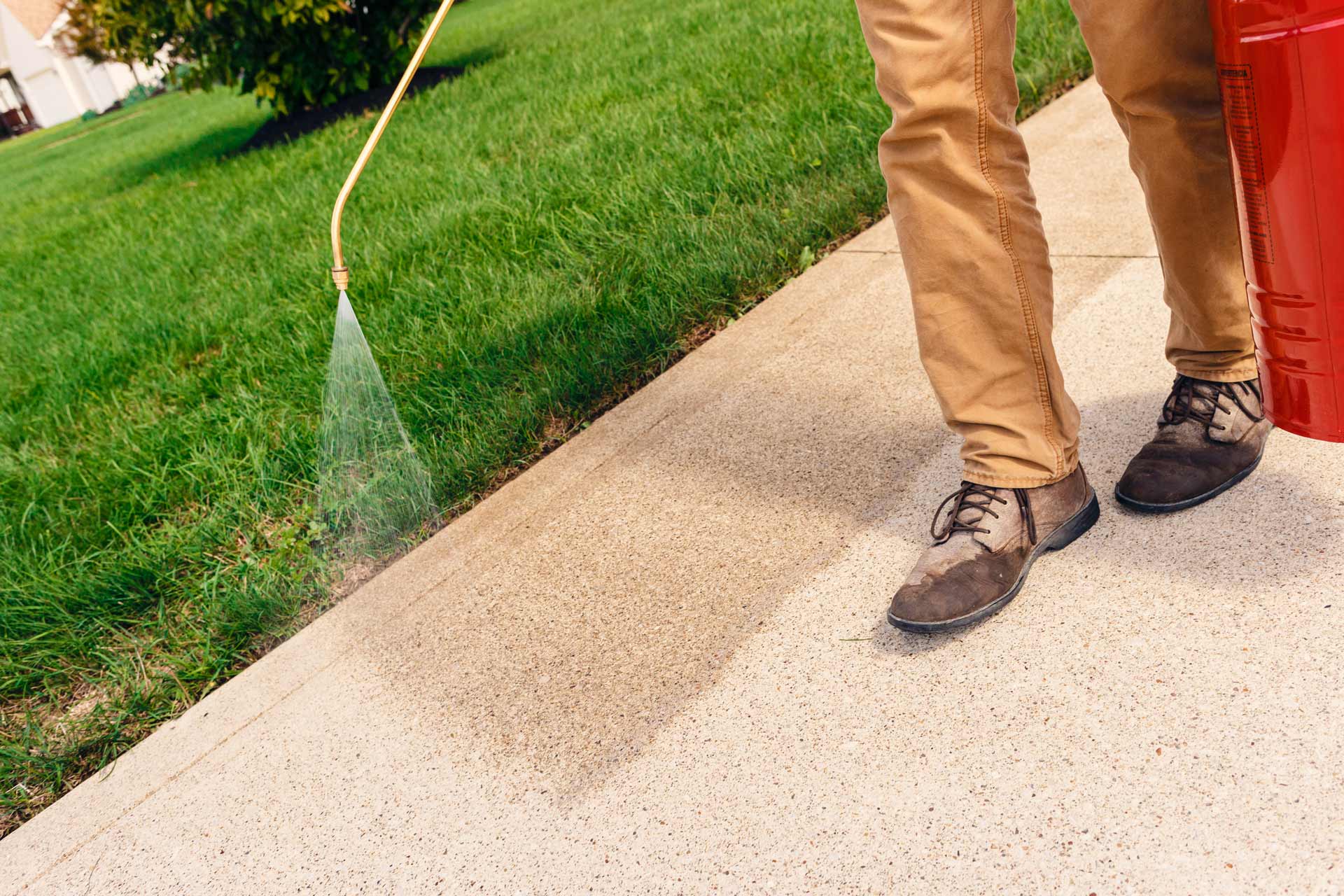
- Siloxane sealer. Applied in a controlled coat that soaks into the concrete over 30 to 60 minutes.
Walkable in an hour. Driveable in 12. Fully protected in 24.

Not Just the Driveway
Freeze-thaw damages every concrete and masonry surface on your property:
- Walkways and sidewalks
- Paver patios and brick walkways
- Pool decks
- Stamped concrete entryways
- Flagstone and stone surfaces
Pavers get hit especially hard. The joint sand between them washes out over time, which lets water penetrate deeper and lifts the pavers in a freeze. Resand and seal before winter and you preserve the install.
Through the Winter
Sealing is the big move. The rest is habits:
Use calcium chloride, not rock salt,
where you can.
Shovel snow fast
so meltwater isn't sitting on the surface for days.
Skip the metal shovel.
It gouges sealed concrete.
Rinse the salt line in early spring
before it does lingering damage.
A sealed, maintained concrete driveway in Ohio can go 25 to 40 years. An unsealed one? 15 to 20. That’s the math.
FAQs About Concrete Driveway Sealing in Ohio
How often should I seal my concrete driveway in Ohio?
Every two years. Heavy salt exposure, full sun, or heavy traffic may push it to every 18 months.
Do I need to seal my concrete driveway every fall?
No — most Ohio driveways need sealing every two years, not every year. But fall is when you check. Walk the driveway each September and look for the signs listed above (water absorbing instead of beading, white efflorescence, early pitting, chalky color). If any show up, seal before the first hard freeze. The habit is annual inspection; the reseal cadence is roughly every two years.
Can cleaning and sealing prevent road salt damage?
Yes, and it’s the only thing that reliably does. Siloxane sealer blocks salt from being absorbed into the concrete, and professional cleaning first removes any salt already soaked into the surface. Without that two-step, salt keeps pulling moisture in all winter and the damage compounds year over year.
Can new concrete be sealed before winter?
It needs to cure 90 days first. Poured this summer? You can seal. Poured in late September or October? Wait until spring.
How much does professional concrete cleaning and sealing cost in Cleveland and Columbus?
Costs in both the Cleveland and Columbus areas depends on driveway size, condition, and surface type. Request a free quote—we don’t haggle, and the price you get is the price.
Will sealing fix cracks that are already there?
No. Sealing prevents new damage. It doesn’t close existing cracks. We fill major cracks before sealing when needed.
Can I just do this myself?
Hardware-store sealers are usually acrylic, which doesn’t hold up to Ohio winters and tends to leave a splotchy finish. Pro-grade siloxane isn’t sold at retail.
Is October too late in Northeast Ohio?
Early to mid-October is fine. Late October depends on the weather. Daytime temps above 50 and no freezes in the next 24 hours? Still viable.


Protect Your Driveway Before Winter
If any of these signs describe your driveway, walkways, or pavers, request a free quote. We’ll assess the concrete and recommend the right cleaning and sealing plan before Ohio’s freeze-thaw does more damage.