

Sanding vs. Pressure Washing Your Wood Deck: Which Is Better?
March 14, 2024
How to Choose the Right Deck Cleaning Method
If your wood deck is starting to look gray, dirty, or worn, you may be wondering whether sanding or pressure washing is the right way to restore it. Both methods can improve the look of your deck, but they serve different purposes. The best choice depends on the condition of the wood and whether you plan to stain or seal it afterward.
Should You Sand or Pressure Wash a Wood Deck?
Pressure washing is best for removing surface dirt, mildew, and old stain, while sanding is better for fixing rough boards, splinters, and uneven surfaces. Many Ohio homeowners get the best results by pressure washing first and sanding afterward. The right approach depends on the deck’s age, condition, and how it will be finished.
Option 1: Sanding Your Deck (Best for Rough or Damaged Wood)
Sanding focuses on the condition of the wood itself. It’s the right choice when the surface needs to be smoothed or repaired before any finishing work can be done.

When Sanding Is Necessary
Sanding is typically recommended if:
- Deck boards are splintered, rough, or uneven
- The wood grain has raised after pressure washing
- Old stain or finish is embedded in the wood
- New deck boards have a mill glaze that prevents stain absorption
In these situations, sanding helps restore a smooth surface and allows stains or sealer to absorb evenly.
Sanding Tips for Wood Decks
- Use 60–80 grit sandpaper for most deck boards
- Avoid very fine grit, which can seal the wood pores
- Be gentle on softwoods like cedar or pressure-treated pine
- Focus on creating an even, stain-ready surface—not a perfectly smooth finish
Sanding is more time-consuming than pressure washing, but it’s often essential for older decks or decks that haven’t been maintained regularly.
Option 2: Pressure Washing Your Deck (Best for Cleaning & Prep)
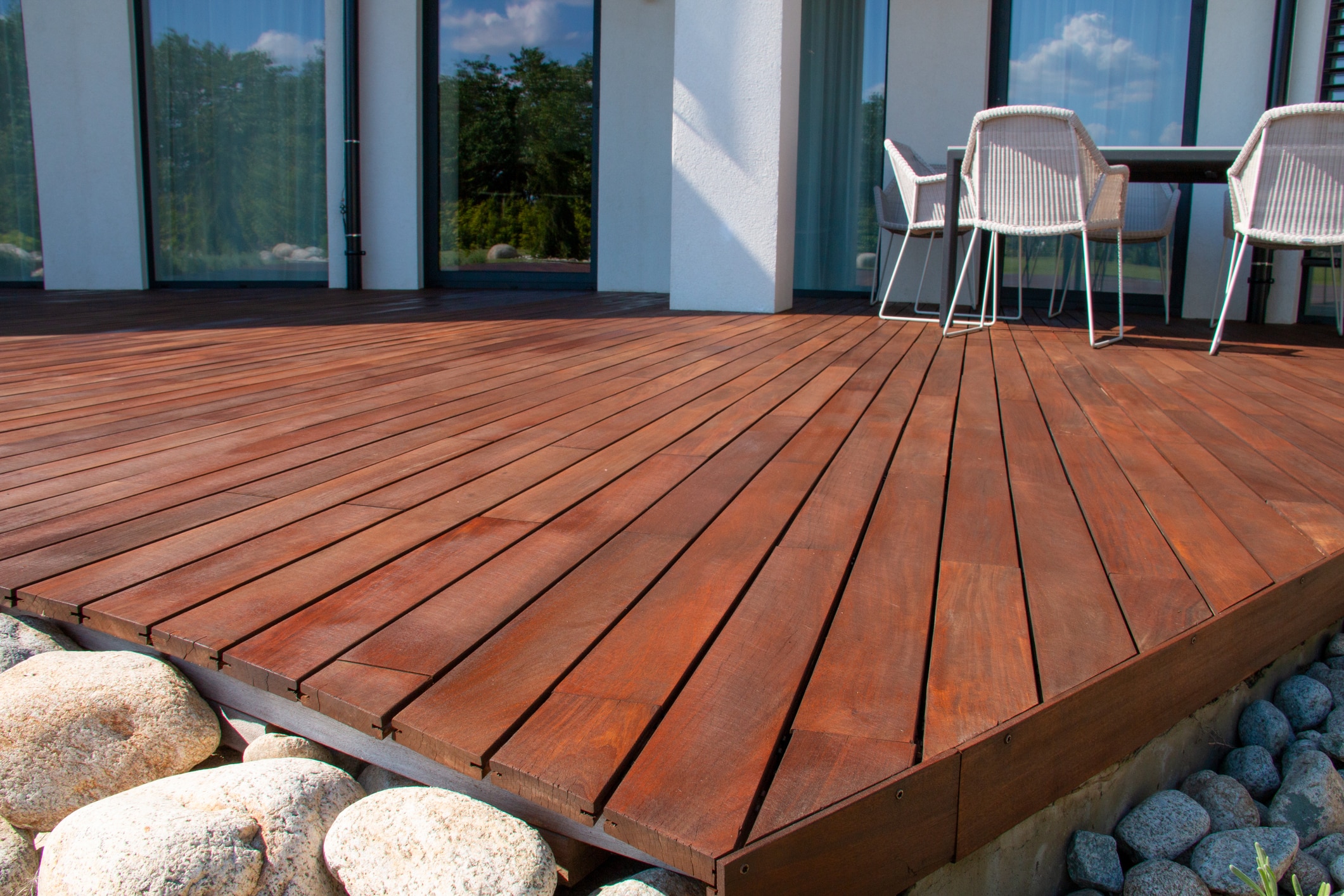
Pressure washing is designed to clean the surface of your deck efficiently. It removes dirt, mildew, and loose or failing stain, making it an effective first step in many deck restoration projects.
When Pressure Washing Is Enough
Pressure washing may be all your deck needs if:
- Dirt, algae, or mildew buildup is the main issue
- Existing stain is wearing away but the wood is still smooth
- You’re preparing the deck for light sanding or re-staining
When done correctly, pressure washing can refresh the appearance of a deck without damaging the wood.
Pressure Washing Guidelines
- Use 500–600 PSI for softwood decks
- Never exceed 1,200 PSI, even on harder woods
- Use a fan-tip nozzle and keep it moving
- Allow 48–72 hours of dry time before staining or sealing
Improper pressure washing can damage wood fibers, so technique and equipment settings matter.
Using Both Methods for Best Results
For many decks, especially in Northeast Ohio’s changing weather conditions, a combination approach works best. Pressure washing removes surface contaminants and failing stain, while sanding smooths raised grain and prepares the wood for a long-lasting finish.
This approach helps:
- Extend the life of the deck
- Improve stain absorption and appearance
- Reduce future maintenance issues
Deck Sanding vs. Pressure Washing FAQs
Is pressure washing safe for a wood deck?
Yes, when done correctly. Using the proper pressure settings and nozzle helps clean the deck without damaging the wood
Should you sand a deck after pressure washing?
Often, yes. Pressure washing can raise the wood grain, and light sanding helps smooth the surface before staining.
Can pressure washing replace sanding a deck?
No. Pressure washing cleans the surface, but sanding is needed to fix splinters, gouges, and uneven boards.
How long should a deck dry after pressure washing before staining?
Most decks need two to three dry days before staining or sealing, depending on weather conditions.
What’s best for older decks—sanding or pressure washing?
Older decks usually benefit from a combination of both to properly clean and restore the wood.
Why Hire a Professional Deck Cleaning Company?
Not every deck needs the same approach. The right method depends on the condition of the wood and how you plan to use and finish the space.
If you’re looking for professional deck cleaning or pressure washing in Cleveland or Columbus, Pristine Clean can evaluate your deck and recommend the best solution.