
Understanding the Damaging Effects of Gloeocapsa Magma
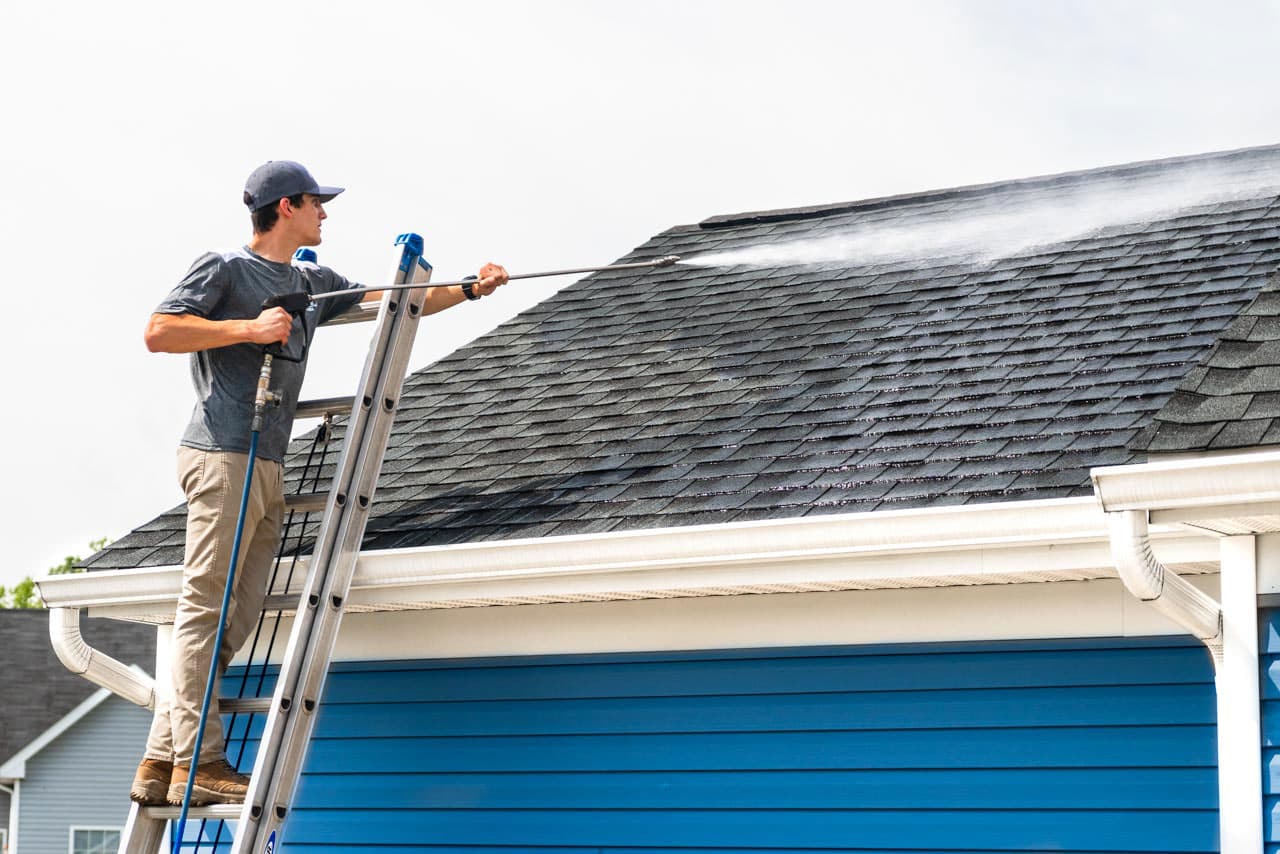
Gloeocapsa magma is a type of cyanobacteria, often referred to as blue-green algae, that is commonly found on asphalt roofs in Ohio. It appears as dark black or greenish stains or streaks on your roof’s shingles. This photosynthesizing bacteria thrives in warm and humid environments and tends to grow on surfaces that receive prolonged sunlight, such as roofs.
The presence of Gloeocapsa magma on roof shingles has several effects. First, aesthetically, it creates unsightly dark streaks or stains on the roof, which can diminish the overall appearance of the house. Beyond that, Gloeocapsa magma affects the functionality and longevity of the roof. The algae colonies hold moisture against the surface of the shingles, promoting the growth of other microorganisms such as fungi, lichens, and moss. Over time, this can lead to the deterioration of the shingles. The algae’s root-like structures can penetrate the granules on the surface of asphalt shingles, causing them to loosen and detach. This can lead to premature granule loss and expose the underlying asphalt to the elements, potentially resulting in damage and reduced lifespan of the shingles.